Showing posts with label experience. Show all posts

Monday, July 7, 2014

Aside: Three Floyds Brewery Ride

One of my "goals" for the summer was to bike to Three Flyods Brewery in Munster, IN. Particularly after talking with my friend Javier about the Austin to Shiner ride (I guess it's called Shiner GASP) while we were training through Chicago's Polar Vortex for the Boston Marathon.

Since the prospect of doing a long run and an 80 mile bike ride on the same weekend didn't sound too appealing, I decided to schedule the ride after Grandma's Marathon while I would take a break from running. Props to Lyndsey Baum for completing her scheduled 16 miler AND our Three Floyds ride!

Considering the apparent popularity of this ride there weren't really that many good resources to help plan the ride itself (that said, it isn't rocket science), so I decided it wouldn't be a bad idea to write a little aside covering some of the important details for fellow Chicago riders.

Where should I start?

Meet your friends on the Lakefront Path (I can't stand calling it the Lakefront Trail). Did you know you can check the conditions of the path by following @activetransLFT?

We rode from the 0 marker at Ardmore Ave (5800 N). Actually, I got on at Lawrence and rode up to meet the Baums:


Meeting anywhere on the LFT is probably a good bet no matter where you live in the city. During the summer there are public bathrooms and access to water fountains from 5800 N to 7100 S (the South Shore Cultural Center, where the other 0 marker is).

Where do I go after the Lakefront Path ends?


Actually, if you've never been to the 0 marker on the Southside, it's actually not that easy to find. Up until this point, it is pretty clear how to follow the Lakefront Path south, Once you get to 71st/E South Shore Dr, it may not really be clear that you'll need to turn east and continue until the two streets split (you should Google Streetview if you really want to see what it looks like, in fact here's a link).

Once you've made it to The End (the marker is at the northeast corner of the intersection), you'll want to continue down South Shore Drive until you get to 79th Street (1.25 miles). At this point, you have the option of riding on what looked like the recently reclaimed S Lakeshore Drive (which was very beautiful) or continuing on South Shore Drive (which does wind a bit) to 95th Street:


I'm getting hungry...

For the full experience, you'll want to refuel at Calumet Fisheries, a Chicago dive which has been critically acclaimed by the press for years. Be forewarned you won't find any bathrooms here so do you business elsewhere! Also it's cash only...


Anthony Bourdain and the ATM

Regardless of what you do at the earlier fork, you can easily get to Calumet Fisheries as long as you're paying attention for 95th Street, both Harbor Ave and Ewing will get you to 95th:


The Burnham Greenway

If you don't like traffic and underpasses, I would suggest taking the eastern route, outlined as it will connect you to the Burnham Greenway with minimal bustle. The more direct route is to ride Ewing to Indianapolis and get on immediately after crossing under the Skyway:


It may look a little funny presented here, but the X marks where you'll be getting on the Burnham Greenway which lies just south of the Skyway and runs parallel for a half mile before turning directly south.

Follow the Greenway (this is dummy-proof) past Eggers Woods Forest Preserve for about 2 miles. This section is literally flat and straight with a handful of street crossings. Once you enter Eggers Woods, pay careful attention for the only fork in the path (again about 2 miles from where the Greenway departs from the Skyway). Take this left (east) turn immediately to get onto Wolf Lake Boulevard:


Follow Wolf Lake Boulevard to the southern most exit by the Ranger Quarters on to Avenue N. At Avenue N and 134th turn left (east) again. This gets a bit sketchy, but should be fine if you ride smart.

You'll  come to a T (there is a Luke's Gas Station on the northwest corner). At this point you'll have unceremoniously crossed from Illinois into Indiana and 134th will be 136! The T intersects 136th with Sheffield. After turning right (south) onto Sheffield continue right at the fork which should keep you on Sheffield which has much less traffic than Hohman though when Sheffield dead ends at Hoffman, you'll want to get on Hohman which will take you through downtown Hammond, IN!


Riding south down Hohman for about a half mile, look for Sibley St and turn left (east). On Sibley you'll be looking to turn right (south) onto the Erie Lackawanna Trail. If you pass the First Baptist Church, you've gone too far!


About .25 miles after getting on the trail, south of Douglas, you'll want to take the right (western) path which is the Monon Trail.

You're Almost There!

Following the Monon Trail for 4.4 miles will get you to Fisher St, cross Fisher and turn left (east) towards the Walgreens and Calumet Ave. Staying on the west side of the street (the sidewalk is nicely divided for bikes) turn right (south) onto Calumet Ave.


Ride a single mile south on Calumet, looking for Superior (there's a Speedway/White Castle just before Superior, if you're thirsty you should buy stuff to drink at this Speedway). Take Superior to Indiana Parkway and you'll have arrived:


Glorious, isn't it?

Once you've arrived, you'll probably have to wait as you can observe in the photos above and below. But that's why you ride with friends (thanks Eric and Lyndsey)!


Eric and I planning our meals.
(photo credit: Lyndsey Baum)

We arrived around 2:00pm and waited for a good couple hours to be seated (We ate, drank, and were on the road again around 5:00pm). I think you might be able to mitigate some of the wait time by arriving closer to 4:00pm of course this would push back your departure time.

Ultimately, it is rather astounding the number of miles you can bike on paths, away from car traffic. This ride was also done in rather mild weather for July and with a nice tailwind out of the south, expediting our return trip a bit. For complete route information of our trip, check out my Strava posts: to Three Floyds and Back Home.

I hope this was helpful for those planning a similar ride. 

Do you have any questions about the ride?

What are some rides you would recommend?

Sunday, July 6, 2014

To Inform and Inspire (Training 6/2-6/22)

Here's a recap of remainder of the training cycle prior to my 2014 Grandma's Marathon. If you'd like, here are links to the plan I outlined after registering for the race and a recap of the first four weeks of training.

To begin, I'd like to reiterate the goals of the cycle:

1) Stay healthy. By prioritizing workout/long run quality over volume, I hoped to stay healthy. I ran too much the in first week of the cycle. Unlike in other cycles, I realized my behavior was not moving me towards my stated goals and adjusted for the rest of the cycle. I was able to complete the cycle healthy which gave me a lot of confidence going into the race.

2) Practice running Marathon Pace, again by prioritizing quality over volume, I hoped to run Marathon Pace more comfortably than in Boston. I was able to execute some key workouts that I believe really helped contribute to my ability to handle Marathon Pace. Executing these workouts successfully required me to focus on being properly recovered then properly recovering afterwards. For me this meant eliminating "junk" mileage. Though I did supplement my running volume with cross training (more on this below).

Week 3

Training at this point was starting to really become tiresome. My body was tired and I was burning out mentally. I remember desperately looking forward to my 10 day-ish taper. It is in these moments when it becomes necessary to lean on your teammates and support structures.

Monday, I decided, due to lacking motivation and a later than usual run start time, that I would swing by Fleet Feet Sports in Lincoln Square for the weekly 6:30pm "Fun Run." Typically Angelica and/or Brian attend these runs and are usually up for a nice 8 miles to/on the lake. Fortunately for me, Angelica and I were able to get some good miles in.

Nice weather on Tuesday prompted an impromptu double with strides.

Wednesday was my opportunity to really nail a hard mid-week workout. Sort of unintentionally, I ended up racing quite a bit during this cycle. A couple of these races fell on Thursdays so they sort of became my mid-week workout. Despite being registered for 13.1 Chicago the following Saturday, I decided that I had to get in a pretty high volume workout at just faster than marathon pace a pace I could live with.

After a string of races where I felt I had significantly under performed, my hope was that my legs were fatigued and that the strength I had built with all of my consistent running would eventually lead to faster running and racing. For Wednesday's workout, I drew on memories of comfortably running a three mile segment of a workout well under 16:00. If I could get close to 16:00 on my last rep I would be content (all this despite the fact I wasn't running much faster than 16:00 through 3 miles during races at this point).

Though I didn't manage to quite hit 16:00, I was pretty happy with how the workout played out:

"I was a bit disappointed that I didn't get any brutally difficult marathon type workouts in during this cycle. I did 3 x 3 miles on the lake half into the wind and half out of the wind, taking 4 minutes between reps: 17:01, 16:45, 16:19. I was very happy with this workout though it left me very tired."

Just to be safe, I took the day following completely off.

I've run a half-marathon in June for four of the past five years. I use this run as a barometer of my fitness going into the big summer training months. 13.1 Chicago as served as this barometer for three of these tests thanks to a couple free entries. This year's edition featured very tolerable weather (I ran my slowest half marathon ever here in 2011), but my big Wednesday workout and general fatigue prevented me from running very quickly:

"Wasn't 100% sure how the legs would respond after my very hard effort on Wednesday. Ended up just sort of running 5:45-55 pace for the whole race. One gear. I'm hoping since I did it on dead legs that this is pretty close to marathon fitness."

These words read as somewhat prophetic as I ended up running nearly exactly double my 13.1 Chicago finish time in Duluth (1:16:47 at 13.1, 2:33:26 at Grandma's). I like to think that it wasn't so much premonition as finally understanding what marathon pace is supposed to feel like. Previous cycles, I had gotten too much confidence from fast, hard workouts. A 17-18 miler with some very fast running mixed in is good training stimulus, but these runs made me overconfident when going into a marathon and didn't provided the appropriate aerobic stimulus necessary to run my intended marathon goal pace without blowing up. I'm pretty sure, easy to moderate 20 milers would have been more beneficial in retrospect.

Week 2

After one of the hardest weeks of the cycle, I was very happy to be done with workouts long, marathon type workouts. That said, two weeks is a long time to just sort of run aimlessly. Workouts (that you're slightly scared of) provide a very nice stimulus with intermediate goals and a mini recovery cycle. As you can see I didn't get too creative (I think I ran the exact same route 3 times this week). My goal here was to rest from marathon pace running while continuing to run somewhat consistent volume. I ran 2 hours for my final long run. This was probably a bit too long in retrospect, but I took off the day following so I don't feel too bad about this one.

I also did a mid-week 6 x 1k which went pretty well:

"Did 6 x 1k with Strubbe, Javier, and Andrew: 3:21, 3:15, the rest were around 3:10. Pleasantly surprised to feel decent during this one. Pretty cashed after the 6th one though. 2 min recovery between reps."

After so much running at or around marathon goal pace, I thought it might help break the week up and be good to do a bit of running at 5k pace.

Finally, due to additional rest/fitness coming around/boredom, my runs became much faster on average (let's say from ~7:45 average pace to more like 7:00).

Week 1

The first half of this week was an extension of the previous week. I was sick of running 8 milers, but I was also afraid that if I didn't run at least 8 miles, my body would stiffen up and not feel very good. I was very relieved to make it to Thursday prior to the race as I more or less let how I felt finally dictate how I ran. I was sick of running so I basically just warmed the legs up.

Friday, I alternated fast/slow 200s on the track for 1600m with a mile warm up and cool down. I wanted to get the blood flowing a bit faster as I knew I'd be sitting on the plane. Little did I know I'd be driving!

I was pretty happy with how my taper played out. I'm not a fan of cutting mileage significantly since I don't feel like I'm running too much mileage to begin with, however I did feel like reducing intensity 10 days out while keeping volume consistent, then slowly dropping volume until you're just relying on your body seemed like a good way to taper down for a goal race.

Unlike my first two marathons where I feel like stumbled on success, my previous three less successful cycles  (four if you count failing to even start in 2011) along with this mini-cycle taught me a lot about what sort of training I need for low 2:30s fitness:

  • Appropriate recovery, typically incomplete recovery in order to simulate the fatigue of the marathon distance, prioritizing recovery before and/or after key workouts in order to stay injury-free. I think Luke Humphrey does a pretty good job describing this in Hansons Marathon Method, he calls it "cumulative fatigue." I'd also lump in self/preventative care. I've been able to find a routine that has kept my lower legs from preventing consistent training so far.
  • Longer (hard) long runs (I count my 2:42 in Boston as one of my key long runs as well as my 2:49 in California). Now this idea is very Canova-esque as my Boston run was about 95% of my Grandma's effort for 100% of the marathon distance.
  • Some running at faster than marathon pace, 5k pace for me (including a few races). This will not feel very comfortable or build your self-confidence much, particularly if you're used to running faster at shorter distances.
  • Regular cross-training. I didn't really included this in my earlier write-ups as I've never viewed bike commuting as training, but I certainly spend enough time on my 11 mile round-trip bike commute to count these efforts a significant aerobic stimulus. I plan on starting to log these consistently for my next cycle. I realize now that when I was running well in the marathon, I was also doing a pretty decent bike commute on a regular basis.

Finally, I also drew a lot from Matt Flaherty's 2:25 at the 2013 Napa Valley Marathon which occurred after he was sidelined for much of 2012. Taking off the final two months of 2013 and spending January 2014 splitting time between the pool and the roads, I had my doubts about getting into low 2:30s shape this calendar year, but it certainly helped me to review Matt's record and not put too many limits on my own running. I also took a lot of ideas as well as inspiration from Rich Heffron's build up to the 2013 Grandma's Marathon where he posted a nice 2:31:21 PR. Rich started his build up in 2013 at nearly the same time I did in 2014 so it was very helpful to track my own progress against his. My hope is that someone else will be able to use these blogs to join Rich and I in the Chicago-area low-2:30s club! Thanks guys!

What resources have informed and inspired your running?

Saturday, June 28, 2014

Race Recap: 2014 Grandma's Marathon

I'd be remiss if I didn't begin with a thank you: thanks for reading, and for the kind, supportive texts/tweets/posts/photos/tags/etc!

I ran my final long run 7 days prior to the race, an easy-ish 2 hours (17 miles). The week of, I forced myself to run a couple 8 milers despite being pretty tired of running/training (I ran 3-5 easy on the other days). I also forced myself to stop biking to work on Thursday. Thankfully I only had to take CTA to/from Niles Thursday as I was able to work a half day from home on Friday before leaving for the airport.

After rushing to O'Hare (I'm usually late-ish), my flight was canceled shortly after arriving (late) to my gate. This was about 16 hours prior to the 7:45am start of the 2014 Grandma's Marathon.

Standing in the customer service line at O'Hare, I decided that my best course of action was not to find another flight but to drive. Even if I was re-booked on a later flight, how could I trust that it wouldn't also be cancelled? On my shakeout earlier in the day, I came to the realization that the time had come to be stubborn. Training without injury is a dance of compromise, changing or shifting plans in favor of consistency. Racing when the fitness is finally present is about courageously/stubbornly pursuing your goals: maintaining the pressure and not backing down or changing course when things get uncomfortable. It was a shift I was not so sure I had prepared to handle. That said, the first challenge came much earlier than expected when my travel plans fell through.

I felt good about driving, but I could not have done it without help! My parents kindly shifted their weekend plans in order to allow me to use their second car to make the drive to Duluth. Meg and Bess who were already in Duluth were able to pick up my race packet and room keys as I'd be arriving much too late to do either.


Arriving around 1am, I ate some food (two bags of microwavable rice if you must know, should have just done one bag), prepped my race gear, and rolled out my legs in an effort to mitigate the effects of 8 hours of sitting in the car. Getting to sleep at 2am, I was happy to finally be in Duluth. Having done the first portion of the drive up to Duluth many, many times driving to/from Carleton College where my sister, Rachel, and brother, Jonathan, went to school, the drive it self didn't really bother me too much. I knew I was capable of making the drive solo. The lack of sleep didn't really bother me either as my sleep as been somewhat inconsistent of late and prior to my fastest marathons I hardly even slept the night prior due to nerves. They say it is two nights prior that really counts.

5:00am came quickly, but I still felt good (not groggy or tired) when I woke up. I went for an easy 10 minute shakeout on the St. Scholastica campus where we were staying (I'd stay there again, it was great!). The legs felt pretty good, not great but good enough. We took the 5:45am bus to the start which picked us up from just outside the dorm where we were staying. Once in Duluth (haha), pre-race logistics were pretty painless.

We were fortunate to have a cool, but not cold day which made the pre-race waiting much more tolerable. That said, I can't believe I forgot any type of throwaway garments and warm-up tights for the start line. It ended up being totally fine, but in the moment I could have used a little something.

On the start line, they dropped the men's and women's elites in front of us normal folks so there was about 60-70 (?) runners already a head of me. Which was more or less totally fine. I hoped would help me stay controlled over the first mile or so.

When the race finally started, I started slowly, keeping in mind the task at hand, but not as slowly as in Boston where I split a 6:35 first mile. I split 6:10 with an approximate 6 second delta between gun and chip times. So I was just about perfect, pace-wise. The first portion of the race, I was just trying to run as comfortably as possible, as close as possible to 5:55 pace. 6:10s, 6:05s, 6:00s, were permissible as long as I was comfortable until at least mile 20-ish. I was trying to replicate my memory of cresting Heartbreak Hill feeling good aerobically (unfortunately that day, my muscles were totally trashed and were the limiting factor).

Without the elevation profile of Boston, I wasn't sure how to segment the Grandma's, however after being pleasantly surprised after feeling out the first few miles, I decided that the segmentation that Dan Daly had suggested for Boston was probably still applicable to Grandma's Marathon (and perhaps most marathons now that I think about it). Specifically this entailed:

  1. Starting conservatively
  2. Running goal pace, strong and steady through mile 17 (in Boston this is where the Newton Hills begin)
  3. Surviving miles 17-22 (the Newton Hills, typically my mentally toughest miles regardless of the course)
  4. Unleashing the kraken on miles 23-Finish
Miles 2 and 3 were 5:50 and 5:52. It was here that I began to trust a bit more in my intuition that my run at 13.1 Chicago was probably pretty close to marathon pace (I ran 1:16:47 (5:52 pace), but only had one gear the whole race). I was still cautious and backed off a bit, hoping to run 5:55s through mile 13-17.

I ended up splitting 6:01 for the 4th mile, but then put together a nice string of mid 5:50s: 5:54 and 5:54 for miles 5 and 6 then 11:53 (5:57 average) for miles 7 and 8. It was here that I got to chatting with Adidas Running Rep, Ben Kampf. Having a full blown conversation during a race is a weird experience, but I enjoyed it immensely. It took my mind off the miles for a moment, and kept me relaxed and hopeful I hadn't gone out too aggressively.

We slowed a bit in mile 9, splitting 6:00 and I broke away from the group I had been running with at an aid station and forged on. I was still pretty focused on running 5:55s, telling myself that I needed to stay as comfortable as possible through at least 15 miles. Mile 10 came pretty quickly and was the first time I really started to feel a bit of fatigue. Splitting 5:44, I pushed any irritation at my inconsistency out of my mind and backed off a bit.

Miles 11, 12, and 13 were a bit slower than I would have liked, but I found myself still clicking off sub 6 minute miles despite a very aggressive 10th mile so I couldn't be too upset. Splitting 5:58, 54, and 59, I found myself crossing the half-way point feeling pretty comfortable in 1:17:45. I was on pace to even split a 2:35:30 which was just a bit off one of my goals of running the sub-2:35 Fleet Feet / Nike Racing sponsored athlete qualifier. I figured with how I felt, I could find 30 seconds over the next half so I was encouraged a bit though still plagued with doubts as I've gotten to half-way in every marathon I've run still on or around my goal pace. The carnage usually ensues within just a few miles.

I told myself at half-way to hang tight and run comfortably for another couple miles to mile 15. Then revised my thoughts and told myself to chill until mile 17. Then mile 20. I've had too many races become death marches in these middle miles.

That plan went out the window when I was passed just after half-way by a guy running just a bit faster than my planned mid-5:50s. We ended up running 5:45 for the 14th mile. At that point, I decided to back off a bit, but to try to start running 5:50 pace. I was still feeling good and I figured that had I shot myself in the foot by running the earlier miles too fast, there was nothing I could do about it at this point in the race.

The next few miles went by pretty quickly as could see a pretty big group a couple hundred meters a head that I told myself I wanted to catch by mile 20. I hit 5:50, 5:47, 5:51, and 5:49 for miles 15, 16, 17, and 18. Then split 11:31 (just off 5:45 pace) for miles 19 and 20. I managed to catch up with the group I was trying to run down that included the top American woman as well as a couple guys from Lincoln Running Company Racing.

I had managed to survive to mile 20 without hurting too bad (it wasn't easy, but I wasn't totally suffering).I kept on telling myself that after I took my last gel at mile 21 I just had to run a sub-30 minute 5 mile tempo. Then I decided to break things up a bit more, using other runners on the course to motivate myself. I selected my next target and told myself to push slightly to catch him by mile 23.

The final miles contorted themselves in time seeming both short and long. I ran no slower than 5:50 over the last 10k, splitting a 5:38 for mile 25, my fastest of the day. I was able to pick off a few more runners over these final miles and received some well appreciated cheers from bike-mounted Chuck of Brooks Running and Dan and Allie Walters (if you're on Facebook and like running you should follow Dan Walters Running)!

Crossing the finish line less than two minutes off of my PR felt great, I laughed with relief and joy. I hadn't come closer than within nine minutes of my PR over the past three years and it was beginning to be difficult to believe I'd ever be able to achieve my goals. The marathon can be a cruel event and apparently I have been slow to learn my lessons.


I hope to follow up this race recap with a bit more of a dive into the last few weeks of the training cycle and the race itself to pull out some of the principles I think others can apply to their training and racing. Check out my race review on BibRave. The short review is that Grandma's Marathon is a must-run American marathon. In my opinion it is up there with Boston, particularly if you want to run fast as the field up front is very deep. They did a great job producing the event.

At Grandma's Marathon, my expectations aligned with my fitness/reality. Can you share a time when this happened for you? What were the key factors driving this alignment?

Thursday, April 24, 2014

Race Recap: 2014 Boston Marathon

First off, thanks for reading and for the kind, supportive texts/tweets/posts/photos/tags/etc!

I've been terrible at keeping this space up-to-date for the last 8 weeks or so, but I wanted to make sure to get down my initial thoughts about my 2014 Boston Marathon experience:

The race itself presents some pretty interesting logistical challenges as it is a point-to-point course. Of course one of the biggest perks of the Boston365 program is that we got to ride in a chartered bus (instead of the race provided school buses) and could wait (as long as we wanted) on the warm buses. This was great for the first couple hours, but by about 9:10 am, when I began walking to the start corrals, it was nearly warm enough outside to stand in a singlet and shorts and not be chilly at all (a slightly ominous sign, but at least it wasn't pouring rain).

The walk over to the corrals was filled with greeting various other Chicago-area runners and in my corral (wave 1, corral 2), I quickly found a group of guys I knew from Chicago. Once in the corral, I was thankful to have read about Sage Canaday's hilarious attempt to pee into a bag at the start of his Boston Marathon experience in 2010. Instead of a bag I chose a 20 oz. Gatorade bottle which served me well.

After the gun start, we seemingly very slowly moved in the direction of the start line, ultimately crossing the timing mats around 45 seconds after the gun. I fell in step with Chicago guys, Jason Ream and Craig Taylor. All three of us were focused on a sub-2:40 finish and a very conservative start.

Our first mile was a very pedestrian 6:35 which made me pretty uncomfortable knowing that we had run some pretty significant declines and had perhaps been actively breaking during this mile. I stuffed any fears away, hoping I'd gain tens of seconds back charging into Boston after mile 22.

The next few miles were conservative but not slow as we ran between 6:00-6:10 for miles 2-5. I was feeling good, but not great and was hoping that I'd really be able to get into a rhythm when we dropped the pace below 6:00. The roads were crowded with runners and spectators. So much so that it was difficult to see the aid stations early on. I immediately started drinking water and after the first couple stations also started dumping water on myself as it was pretty warm.

After mile 5, the course flattens a bit and we started trying to get a bit of time back from the slower early miles. We started running our miles in the mid-5:50s. Jason fell off a bit. The pace felt a bit hot and Craig and I had to do a fair amount of weaving as we were already passing slowing runners, but I decided I still felt like I had enough in the tank for the Newton Hills so I kept it up. 

By mile 10 or 11, my left quad was starting to bother me.  Anytime you feel something like that before the half-way point in the marathon, you know you're in trouble. That said, I kept relaxed and enjoyed high-fiving some of the coeds in Wellesley around mile 12. By half-way, the discomfort in my quad hadn't gone away and I considered slowing down, but I again decided that otherwise I felt okay and that slowing down wouldn't necessarily make running on a sore/strained(?) quad less painful. 

Around mile 14 or 15, I ran into Boston365 runner Andrew Kaehr and tried for a short bit to pull him along (while simultaneously dropping off of Craig's pace). After this failed attempt, I regrouped and began setting my own rhythm for the first time in the race this allowed me to feel a bit more comfortable as I was just about to enter the famed Newton Hills.


Running the Newton Hills with fellow Chicagoan Rob Chenoweth.
(Photo credit: Jason Dement)

The Newton Hills are a bit of an enigma as the final hill is somewhat appropriately named Heartbreak, but at the same time they're often down played by experience marathoners. I had made it to Newton, MA on pace and ready to tackle whatever was in store. I was hurting, yes, but generally still running okay, I was happy and hopeful that I'd still be able to pull this one out of the fire. As we began climbing, I noticed that the inclines were taking pressure off of my left quad! I was passing people left and right (literally) the first three climbs and felt good. I had even almost caught back up to Craig. The only problem was that I was getting caught between climbs as it was painful to run downhill and even on flat surfaces. By the time I got to Heartbreak, I was beginning to tire as the rolling terrain was starting to wear me down. I also knew there is a pretty significant descent the mile following which didn't bode well for how the shorter descents had been going. Heartbreak was long, but that's about it. The pain kicked in as soon as I crested it. My quad was shot and I couldn't really use the downhill portion to my advantage.

I went deeper into damage control mode (versus racing mode) and tried to stay as smooth as possible while still moving towards the finish line. It felt like I was crawling along, but really I was running around 6:40 pace (then 7:00 pace for mile 25). I had wanted to get to 22 feeling good, read to "unleash the kraken" in the words of Dan Daly, but instead I was just trying to keep myself going. It felt like I had eons to deal with the disappointment of this development. I did my best to let the crowds carry me (and they did) and I also did my best to enjoy the experience. Jason, who had held back earlier blew by me.

With 1000m to go (underneath the Mass Ave overpass), I knew there wouldn't be anymore quad pounding declines so I decided to do my best to run hard through the finish. I was a bit surprised at how much I had left. I took the right on to Hereford feeling pretty good and passing some runners. I took the left on to Boylston and picked it up again. The stretch to the finish seemed never ending and I did my best to stay engaged mentally, but I probably slowed down after the 26 mile marker.

Looking back on my race, I am disappointed I wasn't able to run more strongly in the final 5 miles. I don't mean this to be an excuse at all, but based on this experience, the Boston Marathon course is hard to train for in Chicago, specifically it is difficult to prepare your legs for hard (marathon pace) downhill running. Sage mentions the 10 x 1 mile workouts he did downhill when preparing for Boston with the Hansons. No doubt 1-2 of these sessions would have been helpful in my preparations. I also could have done a little more of a warm up before the race to loosen the quads and slowed the second mile down a bit (6:35 to 6:08 is a pretty big jump). Other than that I would say I am pretty satisfied by my performance and am happy to have made it to the finish line healthy (not needing 2 months off unlike my previous couple marathons). The 2014 racing season is just beginning and I am optimistic about future success!

It is a bit embarrassing to admit, but I did not really understand how much the Boston Marathon means to the people of the Boston area, other participants, and the running community in general. Prior to this experience, I was certainly guilty of a certain cavalier attitude towards the event (rather foolish, I know, perhaps this was also a way to dissociate from the pressures of performance). While at its core, a running race, the Boston Marathon more so than any other race in which I've participated, reflects the hopes and dreams of the watching world, its host community, and its determined participants.

For me, the 2014 Boston Marathon was a gift from the people of the Boston area, an opportunity not only to leave behind terrestrial cares for fleeting moments to chase a dream, but to be celebrated for this act. The Boston Marathon is my reminder that racing and running are valuable because these acts require and inspire hope.

What does the Boston Marathon mean to you?

*For my thoughts on the 2014 Boston Marathon weekend experience... Check out this blog here.

Monday, February 10, 2014

Rest Days

On Saturday, I got into a couple discussions about the prescribed Day Off/Rest Days in the Boston 365 program. I had some thoughts and recommendations, but after thinking about it a bit, I think doing a post on this topic might be helpful to clarify my thoughts on these matters. The discussions revolved around this sort of statement:

I feel sluggish or sore when running after prescribed Rest Days*.

Our Rest Days are prescribed immediately after our Wednesday night group workouts which constitute the bulk of the fastest running we'll do every week. This is in order to mitigate injury risk as faster running poses arguably more and objectively different stress on your body.

If you tend to feel sluggish on your Friday runs, consider your warm up and cool down routine on Wednesday, the day before our Rest Day. Luke Humphrey in the Hansons Marathon Method does a good job describing warm ups and cool downs without going too deep into the physiology:

"Warm-ups and cooldowns are instances when you will want to run on the slower end of the spectrum. Here the idea is to simply bridge the gap [emphasis added] between no running and fast running and vice versa."

So, what am I getting at?

I would encourage you to focus on performing a thorough cool down Wednesday night. Since we do most of our very fast running on Wednesday, there is a bigger difference between the running at this workout and a resting state (no running) than on a typical easy run. This makes transitions to and from a resting state more important. Additionally since you'll be in more or less a resting state for all of the following day (Thursday) you'll want to make sure you take your time.

It might be tempting to get back to the store as soon as possible after our tough Wednesday workouts, but as long as you don't feel like your mechanics are compromised, I would encourage you to do 10-20 minutes of easy to moderate running to help your body enter a resting state. A cool down should be done at whatever pace feels comfortable. It should be easy, but not slow enough where your body temperature drops quickly particularly in the cold conditions we've been experiencing.

A final recommendation:

In addition to focusing on a thorough cool down, I would consider moving the prescribed Rest Day to Friday. Moving Friday's easy run to Thursday will help your body continue to transition from the fast running of Wednesday to a resting state on Friday. Remember to warm up slowly and ease into your long run pace on Saturday. I find I'm a bit less antsy at the beginning of long runs as I know I have a lot of miles to ease into the run.

Still have questions?

Leave them in the comments below or tweet them to @danielkittaka.

*A clarification: a Rest Day in this context indicates not only a break from running, but also a break from intentional physical activity with a focus on good nutrition (including hydration) and sleep/rest in order to allow for adaptation to training stimulus as well as prevent injury.

Saturday, February 1, 2014

Retrospective: The Runner's Guide to Chicago & Suburbs

A quick Google search reveals very little about Tem Horwitz's The Runner's Guide to Chicago & Suburbs (ISBN 0-914090-54-2).


Published in 1978 by the Chicago Review Press, the book was clearly intended to be somewhat disposable. A 1978 directory of all things running in Chicago it includes descriptions and maps of favorite runs, sundry information about running in general, equipment recommendations including a list of Runners World's top 25 shoes, addresses and phone numbers of various shops and clubs servicing runners, and tear off copies of the maps of the runs to take on the go. Its eclectic, exceedingly specific contents have not aged particularly well, but for a Chicago runner 36 years later, it provides a peek into the gestalt (did I just use that word?) of Chicago running as well as the psyche of a particular Chicago runner of the past.

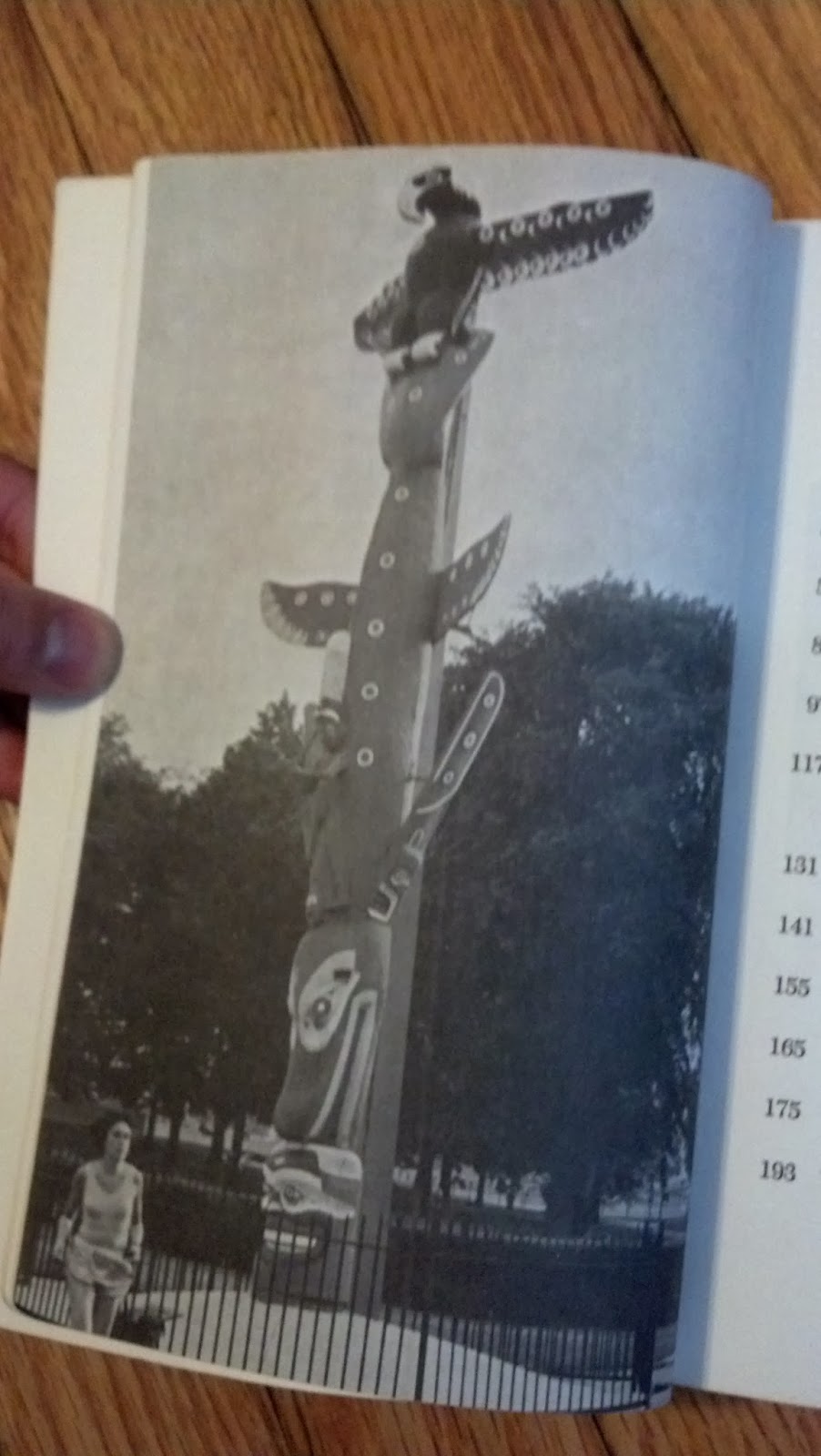
I tend to bring this book up in conversations primarily for the power of the photos which some what eerily mimic those flooding my Facebook and Twitter feeds on a daily basis. My friend, Lynton, asked for more information about the book after our run today, but since there was nothing really on the interwebs, I decided to write a bit about the book and share a few of the iconic photos I had described:

For many this spot is instantly recognizable.
photo credit: Tem Horwitz

It's too bad this area is nearly impassible at the present.
photo credit: Tem Horwitz

I'm pretty sure this is Belmont Harbor.
photo credit: Tem Horwitz

I think that it would probably interesting to include some of the locations that Horwitz describes where I've had the opportunity to run:

Chicago Parks
Lincoln Park (Foster to Grand)
Burnham Park (Monroe to 55th)
Grant Park
Jackson Park
Horner and California Parks
Humbolt Park
Washington Park

Suburbs
Skokie Lagoons
Des Plaines River Trail
Evanston Lake Front
North Branch Trail
Schiller Park
Palos/Sag Valley

Despite this experience, there are still quite a few notable places I have yet to run:

Garfield, Marquette, or Riis Parks
Green Bay Trail (I've biked this, but not run)
Morton Arboretum
Oak Park
Illinois Prairie Path

What is your favorite Chicago & suburbs run?

Sunday, October 20, 2013

Race Recap: 2013 BoA Chicago Marathon

I'll start by just putting down the numbers:

Mile splits:
6:06, 5:57, 5:55, 5:42, 5:57, 5:47, 5:53, 5:54, 5:50, 5:57, 6:01, 5:47, 5:57,

5:54, 5:52, 6:00, 6:03, 6:07, 6:11, 6:22, 6:17, 6:29, 6:39, 6:45, 6:59, 8:38 (1.2 miles).


Half splits: 1:17:32 (5:54 min/mile) followed by a 1:23:45 (6:23 min/mile).

Race morning, I woke up around 3:45am and started fueling with water, the new Clif Bar hydration drink, and an All in Almond Picky Bar (which despite being an allergy sensitive brand is the only favor that really works for me). Did a ~1 mile shake out, went to the bathroom. Generally felt good with the exception of my left shin which to be perfectly honest for the past 4 weeks or so has been bothering me.

I did a 5 mile shakeout with a few soccer turf strides with some of my Fleet Feet Racing teammates on Saturday as my second run of the week. The shin, specifically the areas where my posterior tibial tendon attach, felt "runnable." Some fleeting pain, but nothing I couldn't tough out.

Anyway on my shakeout, the left leg felt "tight" and the pain was fairly acute. At this point though I was already committed to starting the race. Looking back, I should have committed to finishing the race at this point as well. Things had felt good the day before so I tried to stay positive and did a bit of self massage and took a hot shower after shaking out to help loosen things up.


Obligatory Pre-Race Gear Photo

Still feeling pretty good otherwise, I got down to the race site pretty early (~5:50am) as I typically allow myself a bit too much leeway for city races and didn't want to be stressing about getting to the race on time.

Up until actually starting the race, things seemed to be going very smoothly!

The Race Itself

The plan was to run with Fleet Feet Racing teammate, Dave Strubbe through 10k at around 5:55 average pace then slowly accelerate and hold 5:50s for as long as possible.

The first mile is typically very quick so I was actually somewhat relieved to find that I hadn't gone out in 5:20 though also bit disturbed by the fact that my first mile in 6:06 didn't feel as easy as it should have. Perhaps there is something to allowing the energy of the start into your brain and legs. I intentionally slowed myself several times over the course of this mile. I also chalked things up to being a bit "stiff" after only putting in about 15 miles on the week.

The second and third miles were my attempt at continuing to stay relaxed, running by feel, and attempting to stay out of trouble (trying to run on the smoothest portions of pavement and not doing a whole lot of leading). Around this time, Strubbe got about 5-10 seconds ahead of me. I let him go and decided to work up to him slowly as I was still not feeling smooth at the pace we were running.

The fourth mile, I got a bit antsy and dropped my fastest mile of the day, catching Strubbe in the process. This was also about  the time I got to see my family for the first time on the course and  that we started running through the familiar areas of Old Town and Lincoln Park. Seeing this split, I backed off a bit. But as you can see splits 5, 6, and 7 were all over the map. I was still having a difficult time feeling comfortable at this pace.

It is here that I think I should have adjusted my expectations. Running up Sheridan, I was pretty much all alone. There was a big group about 10-15 seconds ahead (which I ended up catching at Addison) and I believe a whole slew of runners behind (not sure by how much, but it couldn't have been more than 20-30 seconds). 5:55 average pace wasn't feeling comfortable (I was forcing the pace even though it didn't feel particularly hard). I should have dialed things back to 6:00 or 6:05.

Instead I pressed on up Sheridan hoping to catch the group ahead for some protection from the wind. It was about here that I also took most of my Honey Stinger chews. Honestly I hadn't ever practiced with them, but I had decided I'd be taking something with whole food-ish ingredients probably once early on in the race. I landed on the chews as gels just haven't been appealing to me lately and some of the other Fleet Feet guys were going to be using them.

After turning onto Broadway, I was safely tucked into a group containing most notably, 2012 Olympic Trials qualifier Laurie Knowles, the "Michigan Guy" I ran with in 2012's BoA Chicago Marathon who was running with a couple of his Club Northwest teammates, and fellow CPS-alumni Steven Bugarin. We rolled together for quite sometime though I was still struggling to stay comfortable. Which is exactly what I told my good friend Mark Wehrman who joined in for a couple miles at this point. He reminded me to stay positive. I kept telling myself things would loosen up and feel more smooth by the halfway point.


Our pack rolling through Old Town

I hung with this group through around mile 15 when we split at 5:52. Things weren't feeling any more comfortable and I knew that mile 16-18 is usually where the struggle really begins particularly if the early stages of the race were not particularly good. I decided to allow the group to go ahead and focus on relaxing and running 6:00 pace through the next stages of the race.

This lasted just a couple miles before I started to slow even more. I was hurting pretty bad both mentally and physically. In retrospect, probably more mentally than physically. I was tired of running hurt. It was pretty clear I was not going to loosen up at all and that my mechanics had been compromised enough by a sore shin that my right leg was taking more of a beating than my left. I was regretting running in my soft, cushy training shoes which helped support my shin, but made my feet work extra hard.

Looking back, I am realizing that while I had committed to starting the race after having a decent shakeout, I hadn't really committed to finishing the race mentally. I spent the "middle miles" of 19-22 making this commitment. Mark jumped in again around mile 20. Running down Halsted, I looked up and saw a mullet and a bright Fleet Feet Racing singlet. It was my teammate, ColeSans who was running his first marathon and based on talk pre-race had gone out with three other teammates at sub-2:30 marathon pace. We caught him quickly at what has become one of my least favorite parts of the course:


I really, really wanted to stop and jog it in with Cole, but Mark wouldn't let me. It was at that moment, I was almost 100% committed to finishing the race. The frustrating thing about this for me was that I couldn't make that decision "on my own." Without a commitment to finishing, Mark had to talked me into finishing mid-race. My mental environment had become too negative with anxiety surrounding running injured and not meeting performance goals for me to realize that running a 6:17 at mile 20 is still actually pretty decent.

While this was probably the watershed moment in terms of successfully completing the race, I still carried a little backup drop out plan in my back pocket for another couple miles. I was expecting to see my family a final time around Chinatown. If I was feeling really terrible, I would drop out in front of them so the would know I was done with the race.

It was running through Chinatown where the wheels really started falling off in earnest. Things were pretty uncomfortable and I think sort of warm since there really isn't much shade on this portion of the course (I don't recall feeling hot though). Mark continued to run with me. I saw my family just before turning east on 33rd street.

The rest of the race was me struggling just to put one foot in front of the other, not cramp, and maintain as much pressure as I could. I felt like I was halfway between racing and jogging it in. I was running slowly for a race, but I maintained sub-7:00 pace until the last 1.2 miles which was about 7:00 pace exactly.

The final turn onto Columbus, I got a bit dizzy and saw a flash of black. I told myself if I had to that I would slow to a walk to make sure I crossed the finish line. I didn't want to run all that way to pass out less than 200 meters from the finish line. Fortunately my body held together long enough for me to run across the finish mats.

I'll have to write another blog outlining the many things I learned and am continuing to learn from this race, but for now this will do.

Did you run the 2013 Bank of America Chicago Marathon? 

Share your thoughts on the race (or a blog recap) in the comments below!

Sunday, September 29, 2013

Race Review: Park Ridge Charity Classic 5k


View Larger Map

Before I forget the details, I wanted to throw together a quick "Race Review" post on the 36th Park Ridge Charity Classic 5k. As you can see, the course is a nearly straight out and back and with pretty calm conditions and temps in the high 60s this race was a great opportunity to run fast.

Online registration and "packet pick-up" were a breeze. Scott Laumann and I picked up our packets just as they were set up around 6:40 am with no issues or waiting at all. The amazing thing about this race is that your race "packet" is literally a fantastic cotton race t-shirt and your race bib. No handouts or flyers, no goofy samples, and no bag! 

Being used to race packet inserts being sold as a part of sponsorship packages, this strikes me as a very interesting choice on the part of race organizers. I love how it contributes to the feeling of purity of purpose. The Park Ridge Charity Classic is a running race to see how fast you can run, build community event (all sponsors were local businesses), and raises funds for charity (though I'm not sure what charity they're raising money for). I'm not even sure if all these things are intentional choices or not, but it is great "marketing" in my book.


One of the neatest race shirts I've gotten in a while

Warmed up with a whole bunch of TTAU guys from the race start area to just a bit past the 1 mile marker for about 2 mile of total easy to moderate running. Did two quick strides at about 5k effort and walked to the line. Felt my left shin a bit on the warm up and even a bit on the strides, but once I accelerated to race pace, it seemed to subside.

Make a conscious decision to not get psyched out by the fast guys and trust that I had the fitness to run with them up front. At my all-time peak fitness, I've run in the low 16 minute range for 5k and even dipped below at a very small 5k with possibly questionable course measurement. Looking at past results, I saw the top runners were running between 15:40 and 16:00. If I was in the kind of shape I thought, I should be right there mixing it up for a podium finish.

Ran by feel, following Mark Wehrman from the gun. Rolled through the first mile at 4:59 (yikes!) with a pack of 6(?) including Jeff Hojnacki. Started to feel the pace a bit and dropped off the pack by about 3-5 seconds. Went through 2 miles at 10:01 (5:01 split), a PR!). Caught one of the Hurricanes guys as he fell of the pack with about 800m to go. Tried to break away but wasn't able to push hard enough. Caught Jeff. with around 500m to go, but got passed by the Hurricanes guy (Tony Teunissen). Finished 6th overall in a huge 5k PR. 5:49 for the last 1.1 for a final time of 15:50.97.